
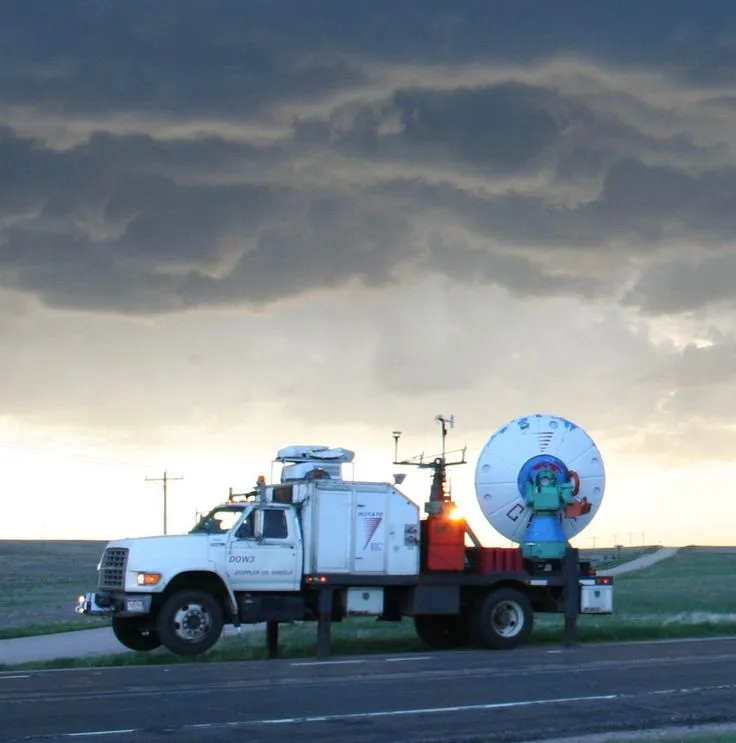
The most dramatic storm photographs usually show the finished product: a towering supercell, vivid lightning, or an imposing cloud base. What those images rarely show is the quieter period beforehand. For travelers considering storm chasing 2027, those hours can become one of the most revealing parts of the experience. They show how an apparently ordinary day gradually develops into something much more dynamic.
Learning to notice this transition adds another dimension to storm chasing. Instead of waiting impatiently for severe weather, travelers can observe subtle changes in clouds, light, wind, and the surrounding landscape. The build-up becomes part of the story rather than empty time before the main event.
Calm Mornings Can Be Misleading
A chase morning does not necessarily look stormy. Blue skies or scattered clouds can make the possibility of severe weather seem surprisingly distant. Atmospheric conditions, however, can evolve considerably during the day. Moisture, warming temperatures, changing winds, and other ingredients may gradually create a more supportive environment for thunderstorms.
For first-time travelers, this contrast can be memorable. Seeing a quiet morning eventually give way to weather demonstrates just how much the atmosphere can change within several hours.
The Landscape Offers Early Clues
Before large storms appear, the surrounding environment is worth watching. Clouds may begin forming over previously clear areas, and their appearance can change as the afternoon approaches. Travelers may also notice differences while crossing the Plains. One region can appear cloudy and subdued while another has brighter skies and more noticeable cloud growth.
These observations provide visual context for forecast discussions and help explain why a group may continue toward one area rather than stopping somewhere that initially looks more dramatic.
Cloud Growth Becomes a Story of Its Own
One of the most interesting pre-storm stages begins when small cumulus clouds start developing. Many may remain insignificant or disappear, while others grow vertically. Watching this process encourages patience. There is no guarantee that the first impressive cloud will become the storm worth following.
Over time, travelers can begin recognizing just how rapidly the sky can change. A horizon that appeared relatively quiet half an hour earlier may suddenly contain much stronger development.
Waiting in the Target Area Has a Purpose
People researching tornado tours 2027 Kansas may wonder why a chase group sometimes stops before anything dramatic is visible. Arriving in a target region ahead of development can provide time to observe how conditions evolve.
Instead of driving continuously, waiting may allow the group to see which storms actually form and how they behave.
During this period, travelers can pay attention to:
-
Increasing vertical cloud growth
-
Changes in cloud coverage
-
Darkening areas along the horizon
-
Shifts in wind or temperature
-
Distant precipitation
-
The first visible lightning
These details can make the transition into weather easier to follow.
Anticipation Changes the Travel Experience
Waiting for natural weather development feels different from waiting for a scheduled attraction to open. There is no exact countdown. A storm might form sooner than expected, considerably later, or not in the preferred location at all. This uncertainty creates a distinctive kind of anticipation.
Conversations during these periods can also be valuable. Travelers have time to ask why a particular area was selected and what developments might influence the next decision.
Photography Starts Before Severe Weather
Photographers do not need to wait for a mature storm before taking out the camera. Early cloud development and quiet Plains landscapes can provide useful images that establish the setting. A wide photograph of small clouds over farmland can later be compared with a much darker scene from the same afternoon. Roads, open fields, distant towns, and changing light can help document the progression of the day.
These images often make a collection feel more complete because they show what happened before the dramatic weather arrived.
The First Thunderstorm Changes the Mood
When a developing cloud finally becomes a thunderstorm, the pace of the day may shift. Attention moves toward its structure, movement, and potential organization.
This transition can feel much more significant when travelers have watched the earlier stages. Rather than encountering an established storm without context, they have witnessed part of its development.
The experience highlights why storm chasing involves observation as much as movement.
Sometimes the Build-Up Leads Somewhere Else
Not every promising area produces the expected result. Clouds may struggle to develop, or storms may form farther away. That does not make the earlier observation meaningless. Instead, it demonstrates the uncertainty involved in forecasting and explains why target changes occasionally become necessary.
Travelers who remain curious can learn from these quieter outcomes rather than treating them as wasted time.
Conclusion
The hours before thunderstorms develop reveal a side of storm chasing that dramatic photographs rarely capture. Quiet landscapes, growing clouds, changing light, patient observation, and uncertainty all contribute to the eventual experience.
With Storm Chasing Adventure Tours, guests can experience the complete rhythm of a chase day, discovering that watching the atmosphere prepare for a storm can sometimes be nearly as fascinating as observing the storm itself.
